

Dry Scalp vs Seborrhoeic Dermatitis: Do You Know the Difference?
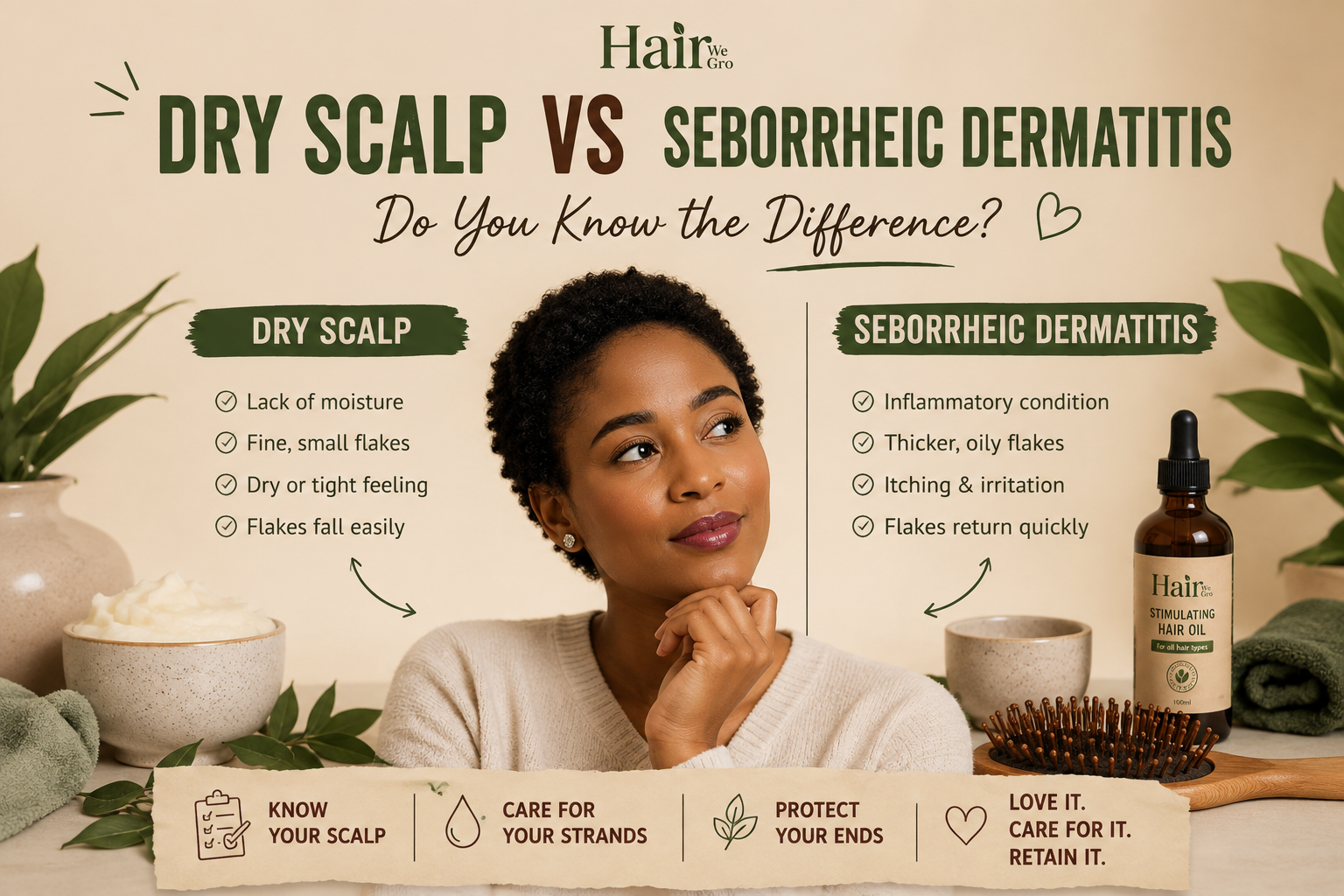
Flakes don't automatically mean dandruff — and a flaky scalp doesn't always mean your scalp simply needs more moisture.
If you've noticed flakes on your scalp, your first instinct might be to reach for an oil or assume your scalp is dry.
But what looks like dry scalp can sometimes be something entirely different.
Dry scalp and seborrhoeic dermatitis can share some similar symptoms, particularly flaking, but they're not the same thing — and understanding the difference can help you make more informed decisions about your scalp-care routine.
So, class is in session. 📝
What is Dry Scalp?
Dry scalp occurs when the skin on your scalp lacks adequate moisture.
Just like the skin elsewhere on your body can become dry, tight or flaky, the skin on your scalp can experience the same thing.
You may notice:
Fine, small flakes
A dry or tight feeling
Flakes that easily fall from the scalp
General dryness of the scalp
Things such as environmental conditions, your cleansing routine and products that are too drying for your scalp may contribute to dryness.
The important thing to remember?
Flaking doesn't automatically mean dandruff or seborrhoeic dermatitis.
Sometimes, your scalp really is just dry.
So, What is Seborrhoeic Dermatitis?
Seborrhoeic dermatitis is an inflammatory skin condition that commonly affects areas of the body with a high concentration of sebaceous (oil-producing) glands, including the scalp.
It can cause symptoms including:
Persistent or recurrent flaking
Scaling or build-up
Itching
Irritation
Flakes that return relatively quickly after washing
Unlike simple scalp dryness, seborrhoeic dermatitis isn't merely a lack-of-moisture problem.
And that's an important distinction.
The clue? 🔍
DRY SCALP → Moisture problem
SEBORRHOEIC DERMATITIS → Scalp condition
They can sometimes look similar.
But treating them as though they're exactly the same thing may leave you wondering why your usual scalp-care routine isn't giving you the results you expected.
What Causes Seborrhoeic Dermatitis?
The exact cause isn't completely understood, but seborrhoeic dermatitis is thought to involve several factors, including the activity of the sebaceous glands, an inflammatory response and a yeast called Malassezia that naturally lives on the skin.
That doesn't mean having Malassezia on your scalp means something is wrong — it's normally present on human skin.
Rather, people with seborrhoeic dermatitis appear to have an abnormal inflammatory response associated with it.
The condition can also fluctuate. You may experience periods when symptoms improve followed by flare-ups.
Why Adding More Oil Isn't Necessarily the Answer
This is where understanding what you're dealing with becomes particularly important.
When we see flakes, it's easy to think:
Dry = needs oil.
But oil and moisture aren't actually the same thing.
And if your flaking is being caused by an inflammatory scalp condition rather than simple dryness, repeatedly applying cosmetic oils without addressing the underlying condition isn't the same as treating it.
That doesn't mean you have to abandon your entire scalp-care routine.
It means separating treatment from aftercare.
Treatment vs Aftercare: What I Personally Did
I've experienced seborrhoeic dermatitis myself, so this isn't something I only discuss from an educational perspective.
When addressing my own symptoms, I used Nizoral shampoo according to the instructions provided with the product.
That was my treatment step.
After washing, however, I still wanted to care for my scalp and hair as part of my normal routine.
That's where aftercare came in.
Hair We Gro Stimulating Hair Oil formed part of my personal post-wash scalp-care routine.
There's an important distinction here:
The oil wasn't my treatment for seborrhoeic dermatitis.
It was part of the scalp-care routine I personally followed after washing.
And that's exactly how I think about the two:
Treatment addresses the condition.
Aftercare supports my regular hair and scalp-care routine.
What About Your Hair?
Scalp health is only one part of the conversation.
While caring for your scalp, don't forget the hair growing from it.
Afro-textured hair in particular can benefit from a routine that considers both scalp care and length retention.
That means paying attention to:
Your scalp: cleansing and caring for it according to its needs.
Your strands: maintaining moisture, handling the hair gently and reducing unnecessary manipulation.
Your ends: protecting the oldest and often most vulnerable part of your hair.
Because growing healthy hair is only half the lesson.
Keeping the length you grow matters too.
When Should You Seek Professional Advice?
Persistent scalp symptoms shouldn't automatically be self-diagnosed as dryness.
If you're experiencing significant or persistent itching, inflammation, redness, scaling, soreness, hair loss, symptoms that repeatedly return, or you're simply unsure what's happening with your scalp, speak with a GP, pharmacist or dermatologist.
Getting the right diagnosis matters because different scalp conditions can sometimes produce similar-looking symptoms.
Class Notes 📝
If there's one thing I want you to remember from this lesson, it's this:
Not every flake means the same thing.
Dry scalp and seborrhoeic dermatitis can look similar, but one is primarily associated with insufficient moisture while the other is an inflammatory skin condition.
Learning to recognise that difference can stop you from endlessly throwing products at your scalp and wondering why nothing seems to change.
Know your scalp.
Care for your strands.
Protect your ends.
Healthy scalp. Healthy hair.
Continue Your Haircare Lesson
Building a routine that works for your hair doesn't have to mean figuring everything out from scratch.
Stimulating Hair Oil — incorporate scalp care into your regular haircare routine.
Moisturising Hair & Body Butter — moisturise, nourish and support your length-retention routine.
Wash Day Checklist — organise your wash-day routine from cleansing through to protecting your hair afterwards.
Complete Styling Guide — explore 20+ low-manipulation and protective hairstyle ideas.
Teach. Inspire. Grow.
This article is for general educational purposes and shares aspects of my personal experience. It is not medical advice and Hair We Gro products are not intended to diagnose, treat or cure seborrhoeic dermatitis or other medical conditions.