


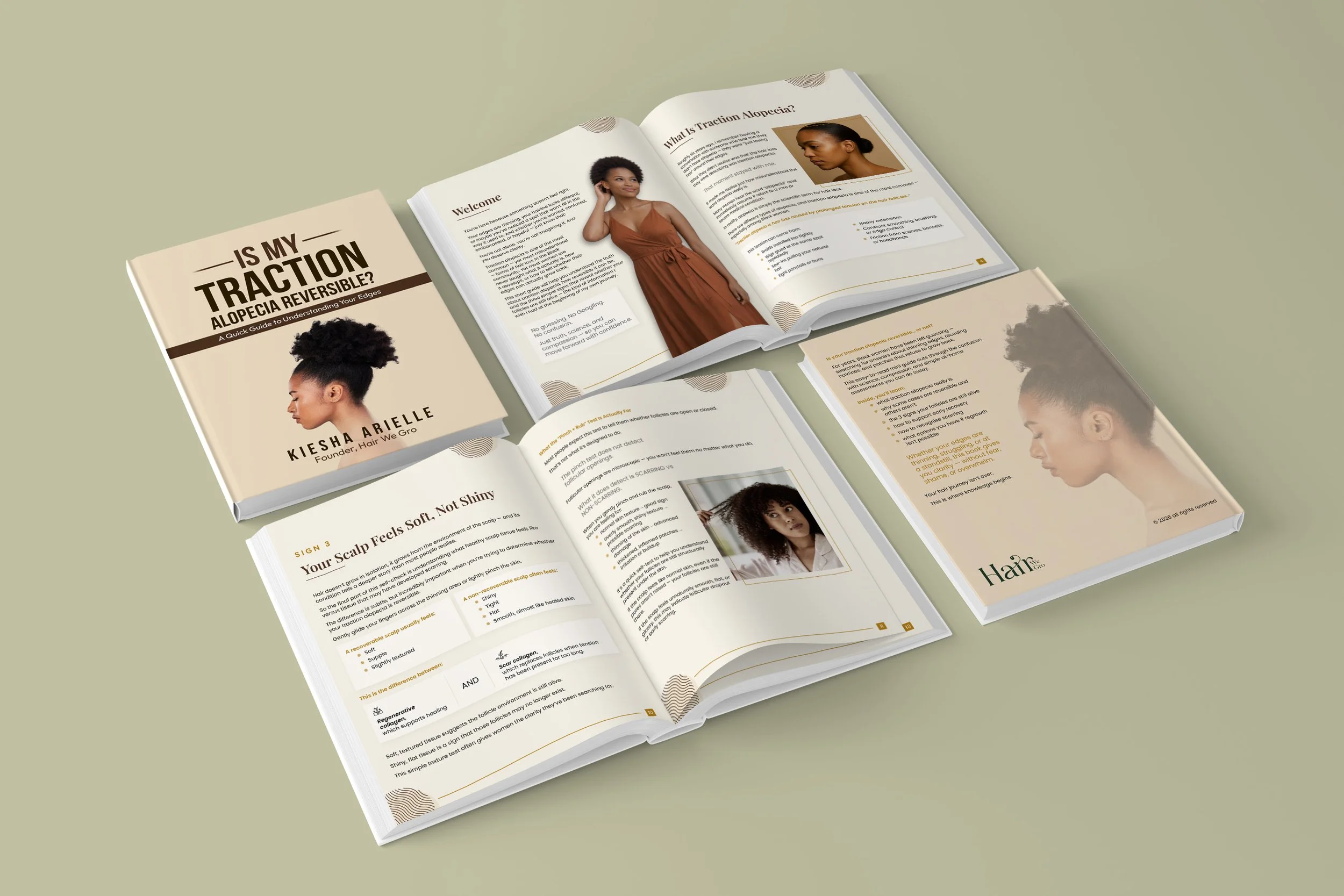
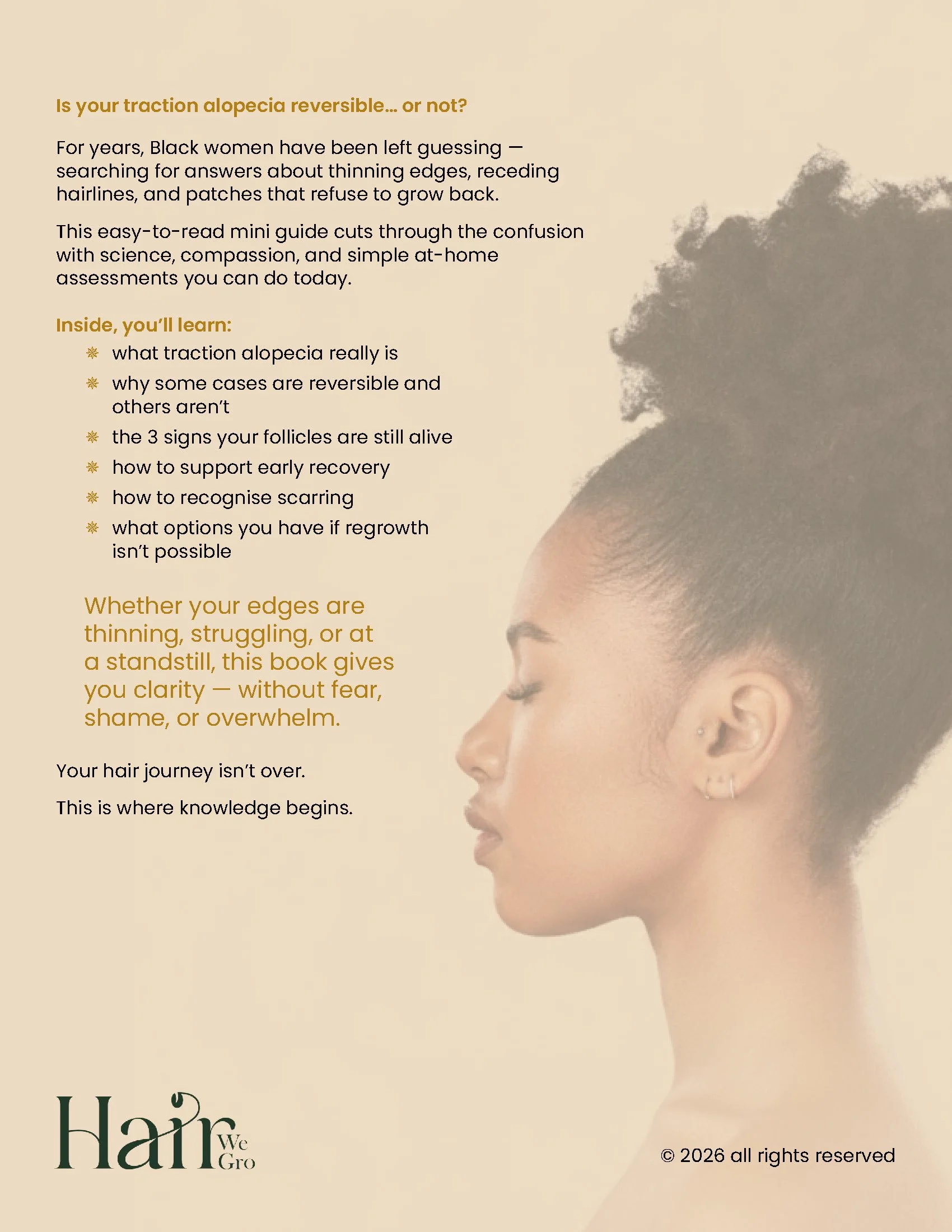
Is My Traction Alopecia Reversible? A Quick Guide to Understanding Your Edges



✅ FAQ
Is this guide for me?
This guide is for you if you’re experiencing thinning edges, a receding hairline, or hair loss caused by tight styles, wigs, extensions, or long-term tension — and you want to understand what’s happening beneath your scalp without medical overwhelm.
Will this guide guarantee regrowth?
No. And that honesty matters.
This guide does not promise regrowth in every case. Instead, it helps you understand whether regrowth is biologically possible based on the condition of your follicles, so you can make informed decisions rather than guessing.
Is this a medical diagnosis?
No. This guide is educational, not diagnostic. It does not replace medical advice or treatment from a dermatologist or healthcare professional.
Can dormant follicles really grow back after years?
In many cases, yes — dormant follicles can recover if they haven’t been replaced by scar tissue. This guide explains how to recognise the difference between dormant and non-functional follicles and what signs suggest recovery may still be possible.
Do I need special equipment to use this guide?
No. While the guide explains what follicles look like under magnification, it also teaches you how to assess your scalp using what you can see and feel at home.
Is this guide suitable if I wear wigs or protective styles?
Yes. In fact, it’s especially helpful if you’ve worn wigs, braids, sew-ins, or tight styles regularly and want to understand how they affect your hairline over time.
How is this different from free advice online?
This guide brings clarity.
Instead of conflicting opinions, trends, or fear-based content, it explains traction alopecia in a structured, evidence-informed way that you can actually apply.
Will this help even if some of my hair loss is permanent?
Yes. The guide explains which areas may still respond to care, which may not, and how to approach both situations realistically — without shame or false hope.