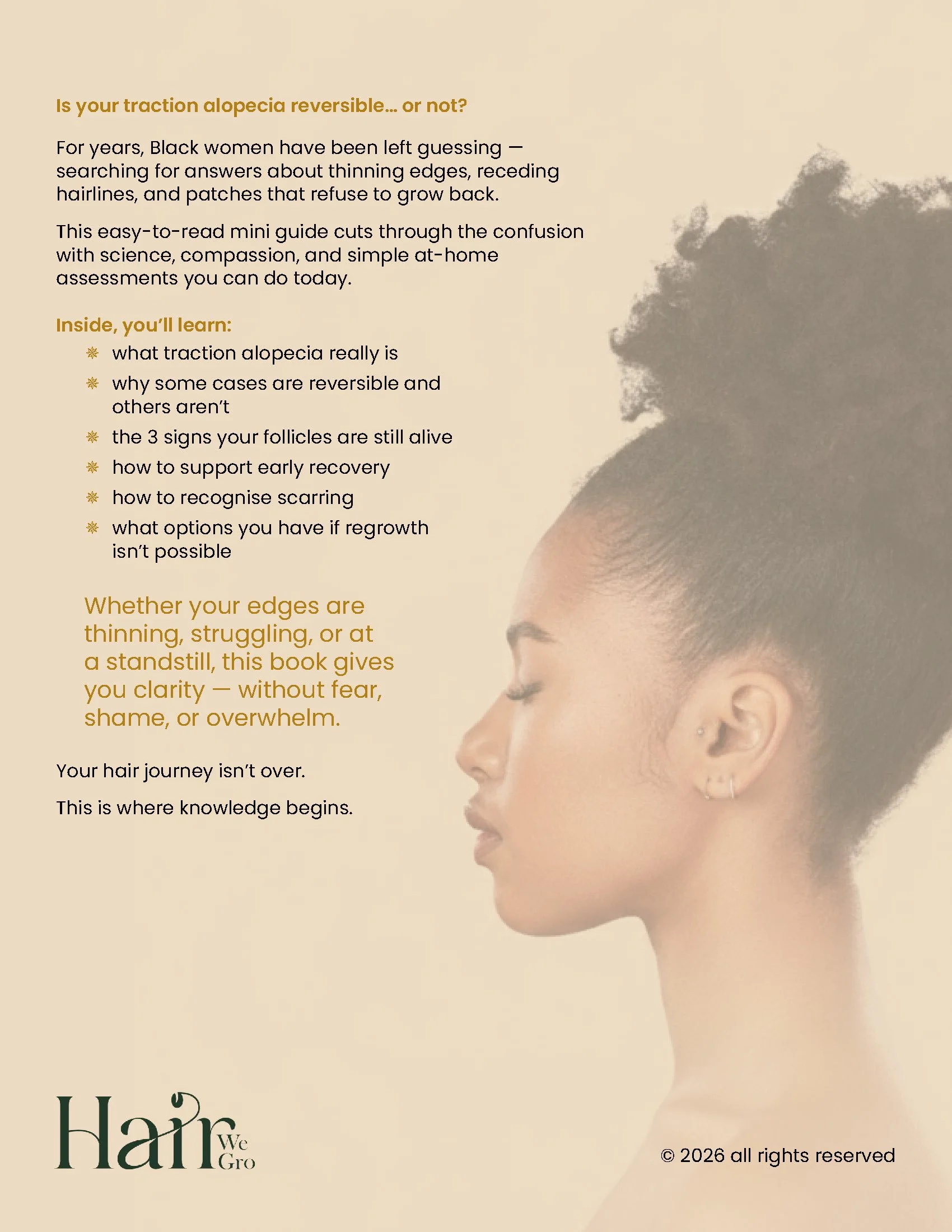

Is My Traction Alopecia Reversible?
A Quick Guide to Understanding Your Edges
If you’re experiencing thinning edges, a receding hairline, or hair loss caused by tight styles, wigs, or extensions — this guide was created to give you clarity without fear, confusion, or false promises.

to “just oil it,” “be patient,” or “accept it.”
But the truth is more nuanced.
Many women are told…
Some traction alopecia is reversible.
Some is partially recoverable.
And some areas, once scarred, will not grow back naturally.
The difference comes down to one thing:
the condition of your hair follicles.
What This Guide Helps You Understand
This mini eBook breaks down traction alopecia in a way that is clear, practical, and easy to apply.
Inside, you’ll learn:
What traction alopecia actually is — and why it’s so commonly misunderstood
Why thinning edges don’t automatically mean permanent hair loss
The difference between active follicles, dormant follicles, and non-functional follicles
How to examine your scalp for signs of regrowth potential
Why some edges grow back repeatedly — and why others eventually stop responding
When care and consistency can help, and when expectations need to shift
This guide is designed to give you understanding first, so whatever you choose to do next is intentional — not reactive.
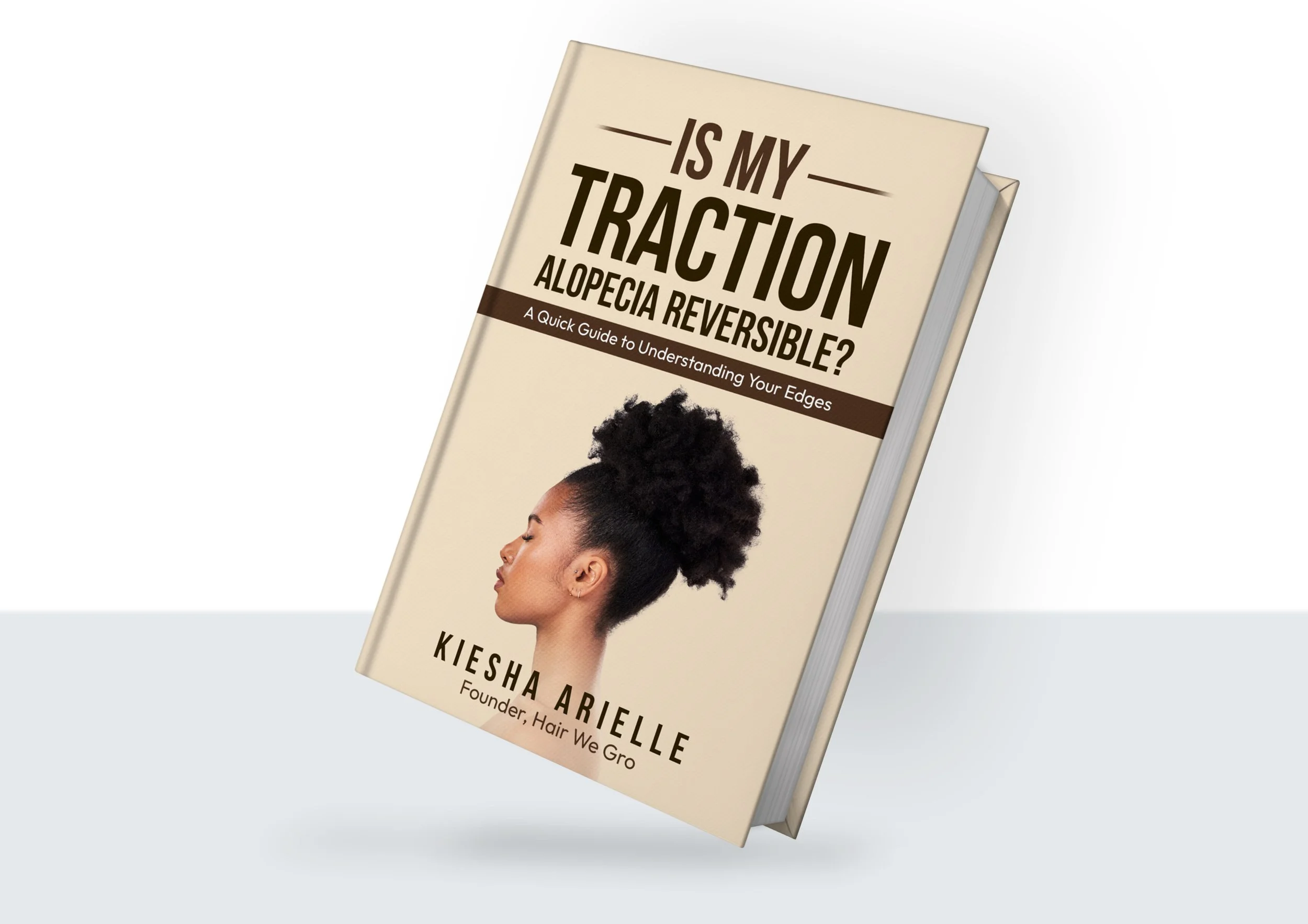
This guide is designed to be read privately, at your own pace.
It combines clear explanations, visual references, and real-world insight to help you understand whether your edges are still capable of regrowth — and what that means for your next steps.
Who This Guide Is For
This guide is for you if:
Your edges have been thinning or receding over time
You’ve worn braids, wigs, sew-ins, or tight styles for years
You’ve seen regrowth before — but it no longer happens the same way
You’re unsure whether your hair loss is temporary or permanent
You want straightforward education you can actually use
You don’t need medical knowledge.
You don’t need special tools.
You just need honest information.
What This Guide Is — and Isn’t
✔️ Educational
✔️ Clear and grounded
✔️ Based on lived experience and research
✔️ Designed to reduce fear and confusion
✖️ Not a medical diagnosis
✖️ Not a regrowth guarantee
✖️ Not a one-size-fits-all solution
This guide doesn’t promise miracles — it offers clarity.
Why This Matters
Traction alopecia doesn’t happen overnight.
It develops slowly, often silently, over years of repeated tension.
By the time many women realise what’s happening, they’ve already assumed the worst.
This guide exists to interrupt that moment — and replace fear with understanding.
Because when you know what stage you’re in, you can finally take the right next step.
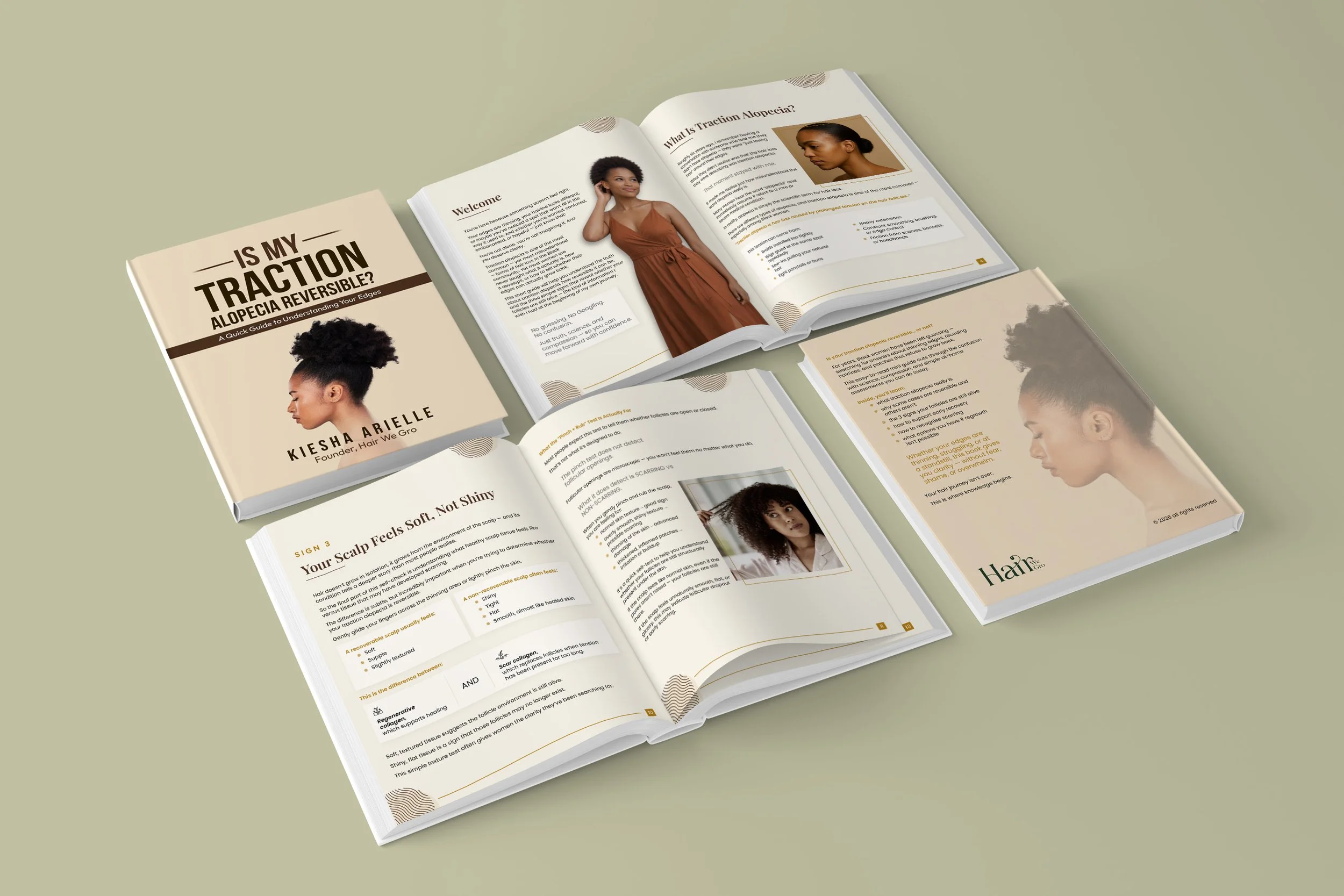
Digital eBook (PDF)
Instant download
Readable on phone, tablet, or laptop
Price:
£14.99
If you’ve noticed thinning edges, a receding hairline, or patches that don’t seem to grow back the way they used to, this guide was written for you.
Is My Traction Alopecia Reversible? breaks down what’s really happening beneath the scalp — without medical jargon, fear-based messaging, or unrealistic promises.
This mini eBook helps you understand:
what traction alopecia actually is
why it develops over time
which stages are reversible
and how to tell whether your follicles are still active, dormant, or scarred
So instead of guessing, panicking, or trying everything at once, you can make informed decisions about your hair — with clarity and confidence.
What You’ll Learn Inside
✔️ What alopecia really means — and why traction alopecia is so common
✔️ How tight styles, wigs, extensions, and tension quietly damage follicles
✔️ The difference between dormant follicles and permanent follicle loss
✔️ How to examine your own scalp for signs of regrowth potential
✔️ Why some edges grow back — and others don’t
✔️ When recovery is possible, when improvement is likely, and when options change
This guide includes real-world explanations, microscopic insights, and clear visual references to help you understand what your scalp is telling you.
Who This Guide Is For
This eBook is for women who:
are experiencing thinning or loss around the edges or hairline
have worn tight styles, wigs, or extensions for years
feel unsure whether their hair loss is temporary or permanent
want practical, applicable knowledge — not a full medical textbook
want to sound informed and confident when talking about their hair
You don’t need to be a scientist or stylist.
You just need honest, accurate information you can apply immediately.
What This Guide Is — and Isn’t
✔️ Educational, empowering, and practical
✔️ Rooted in lived experience and research
✔️ Designed for clarity, not overwhelm
✖️ Not a medical diagnosis
✖️ Not a one-size-fits-all promise
✖️ Not fear-based or salesy
Format
Digital eBook (PDF)
Instant download
Designed for easy reading on phone, tablet, or laptop
Price
£14.99
Copyright
© 2025 Kiesha Arielle. All rights reserved.
This guide is for personal use only and may not be copied, shared, or redistributed.
If you’ve noticed thinning edges, a receding hairline, or patches that don’t seem to grow back the way they used to, this guide was written for you.
Is My Traction Alopecia Reversible? breaks down what’s really happening beneath the scalp — without medical jargon, fear-based messaging, or unrealistic promises.
This mini eBook helps you understand:
what traction alopecia actually is
why it develops over time
which stages are reversible
and how to tell whether your follicles are still active, dormant, or scarred
So instead of guessing, panicking, or trying everything at once, you can make informed decisions about your hair — with clarity and confidence.
What You’ll Learn Inside
✔️ What alopecia really means — and why traction alopecia is so common
✔️ How tight styles, wigs, extensions, and tension quietly damage follicles
✔️ The difference between dormant follicles and permanent follicle loss
✔️ How to examine your own scalp for signs of regrowth potential
✔️ Why some edges grow back — and others don’t
✔️ When recovery is possible, when improvement is likely, and when options change
This guide includes real-world explanations, microscopic insights, and clear visual references to help you understand what your scalp is telling you.
Who This Guide Is For
This eBook is for women who:
are experiencing thinning or loss around the edges or hairline
have worn tight styles, wigs, or extensions for years
feel unsure whether their hair loss is temporary or permanent
want practical, applicable knowledge — not a full medical textbook
want to sound informed and confident when talking about their hair
You don’t need to be a scientist or stylist.
You just need honest, accurate information you can apply immediately.
What This Guide Is — and Isn’t
✔️ Educational, empowering, and practical
✔️ Rooted in lived experience and research
✔️ Designed for clarity, not overwhelm
✖️ Not a medical diagnosis
✖️ Not a one-size-fits-all promise
✖️ Not fear-based or salesy
Format
Digital eBook (PDF)
Instant download
Designed for easy reading on phone, tablet, or laptop
Price
£14.99
Copyright
© 2025 Kiesha Arielle. All rights reserved.
This guide is for personal use only and may not be copied, shared, or redistributed.
Important Notice
This guide is for educational purposes only and is not intended to diagnose or treat any medical condition. If you have concerns about your scalp or hair loss, consult a qualified healthcare professional.
Copyright
© 2025 Kiesha Arielle. All rights reserved.
This guide is for personal use only and may not be copied, shared, or redistributed.
Frequently Asked Questions
-
This guide is for you if you’re experiencing thinning edges, a receding hairline, or hair loss caused by tight styles, wigs, extensions, or long-term tension — and you want to understand what’s happening beneath your scalp without medical overwhelm.
-
No. And that honesty matters.
This guide does not promise regrowth in every case. Instead, it helps you understand whether regrowth is biologically possible based on the condition of your follicles, so you can make informed decisions rather than guessing. -
No. This guide is educational, not diagnostic. It does not replace medical advice or treatment from a dermatologist or healthcare professional..
-
In many cases, yes — dormant follicles can recover if they haven’t been replaced by scar tissue. This guide explains how to recognise the difference between dormant and non-functional follicles and what signs suggest recovery may still be possible.
-
No. While the guide explains what follicles look like under magnification, it also teaches you how to assess your scalp using what you can see and feel at home.
-
Yes. In fact, it’s especially helpful if you’ve worn wigs, braids, sew-ins, or tight styles regularly and want to understand how they affect your hairline over time.
-
This guide brings clarity.
Instead of conflicting opinions, trends, or fear-based content, it explains traction alopecia in a structured, evidence-informed way that you can actually apply. -
Yes. The guide explains which areas may still respond to care, which may not, and how to approach both situations realistically — without shame or false hope.
Have Questions?
We'll review your message and get back to you within 48 hours.